Taxes
Schedule E from the records you already keep
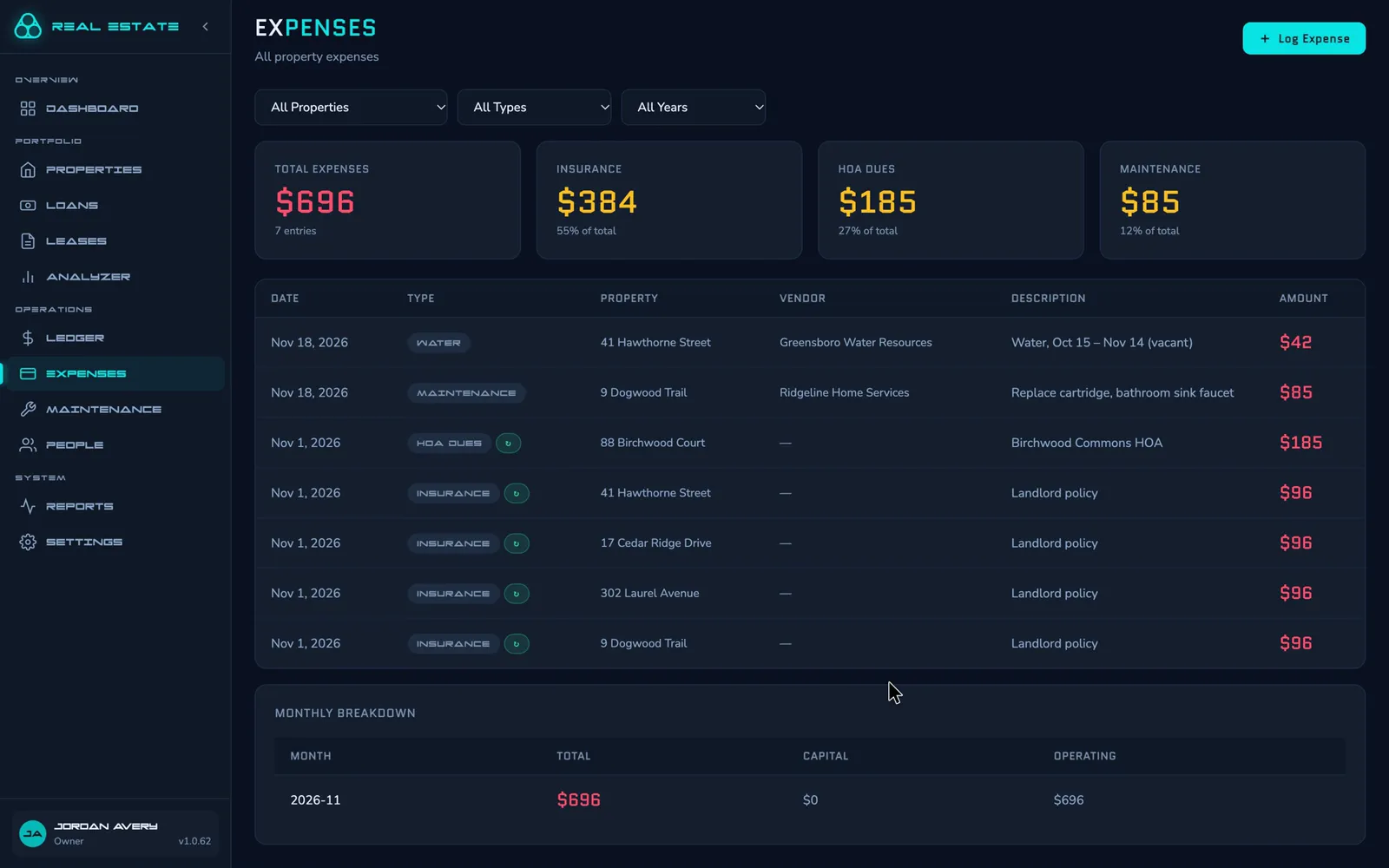
Rent, expenses, mortgage interest and depreciation add up property by property as you work. At tax time, preview the year in the app or download the workbook for your preparer.
Schedule E, property by property
- Each expense type goes to its Schedule E line. Meals count at 50%, and mileage is priced at the IRS rate for the trip's date.
- Security deposits stay out of rent income until part of one is kept or applied to rent.
- Mortgage interest comes from the 1098 you enter. Until then a mortgage's is estimated from the loan's terms (a home equity line's waits for its 1098), and the preview says which.
- Interest follows the money: a home equity line on one property that paid for another is reported on the one it paid for.
- The preview warns about what's missing, like a building with no land value entered.
- The preview and the downloaded workbook come from the same figures.
Depreciation and improvements
- The building is depreciated over 27.5 years from the IRS table (Publication 946), on its cost basis less the land value, from the day it was ready to rent.
- Improvements are added to the basis. Make-ready work before the home is ready to rent counts as part of buying it; after that, it's a repair.
- Appliances, carpet and furniture are depreciated over 5 or 7 years and land improvements over 15, with bonus depreciation unless you elect out for the year.
- An item of $2,500 or less can be deducted under the de minimis election, and the preview reminds you to attach that year's statement.
- For owners who live in North Carolina or Maine, the preview states the state's adjustment for bonus depreciation.
Closings and loans
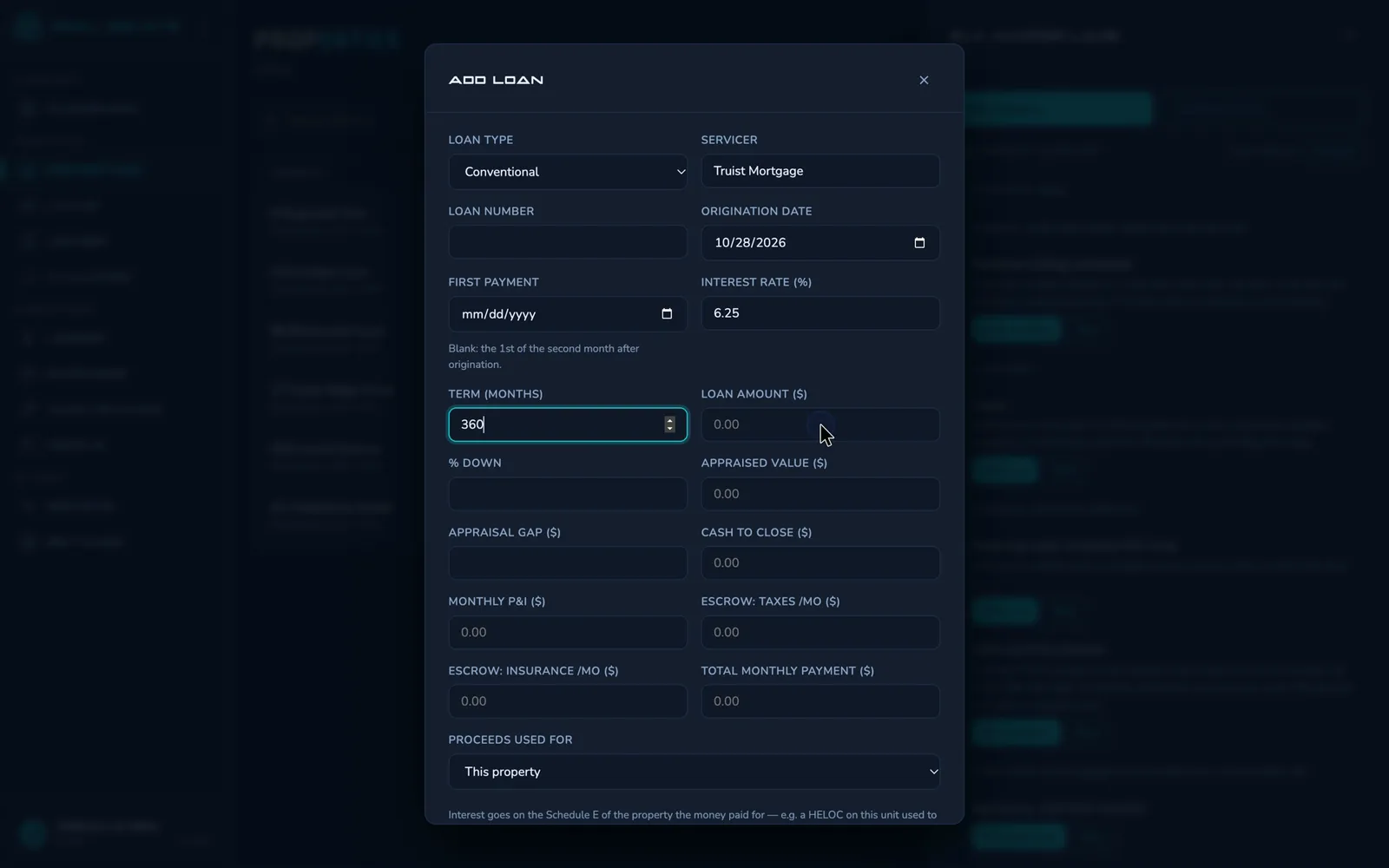
- Enter a closing disclosure or settlement statement line by line, for a purchase, sale, refinance or home equity line. Each line gets its treatment: added to the basis, a loan cost, deducted now or posted to the lease.
- Saving it sets the property's cost basis, the loan's costs and the expenses dated at closing.
- Bought with a tenant in place? The rent and deposit credited at closing post to the lease's ledger.
- Loan costs are spread over the loan, and what's left is written off when it's paid off.
- Loan balances follow the schedule, extra principal and line draws, and each year's 1098 balance.
- A sale's worksheet works out the gain, pays off the loans on its payoff lines and ends the leases. It lists the deposits to hand over, with the state's deadline for telling the tenants.
Before you buy, and after
- Run a house's numbers in the property analyzer: price, financing, rent and costs, with the measures and a 30-year forecast recalculating as you type.
- Compare scenarios side by side, each starting from your own defaults.
- Convert it to a property once you buy, and its panel shows the forecast against what it earned.
- Reports show the portfolio's monthly rent, HAP, mortgage payments and costs, and its equity and loan-to-value from the values you enter.
For you and your preparer
The Real Estate CRM keeps the records and works out the figures your return needs. It doesn't file returns or give tax advice: check your return with a qualified professional.